Set salt, dinosaurs, and lanterns aside, and Zigong (自贡) is first of all a place where people live. To understand it in the present, look less at the slogans and more at the steam off a bowl of noodles, the heat of a shared table, the evening foot-traffic on an old street.
Salt-Gang cuisine: bold flavour, fed by salt
Zigong’s taste was raised on salt. The wealth of the salt trade, an abundance of good salt close at hand, and the countless well-workers and boatmen who needed feeding together produced Salt-Gang cuisine (盐帮菜) — the branch of Sichuan cooking known for being especially fiery, numbing, and intense. This is not the gentle version laid on for visitors; it is the everyday strength locals expect: heavy on fresh chillies, málà pepper, and pungent aromatics.
Among the signatures are cold-eaten rabbit (冷吃兔), which keeps for days and rewards slow chewing; huǒbiānzi beef (火边子牛肉), sliced almost translucently thin; and, from neighbouring Fushun county (富顺县), a celebrated bowl of Fushun bean-flower (富顺豆花), prized for its dipping sauce. For an outsider, asking for “not spicy” (不辣) is a useful charm — but to taste the city as it tastes itself, leave the heat in.
The rhythm of old streets and tea houses
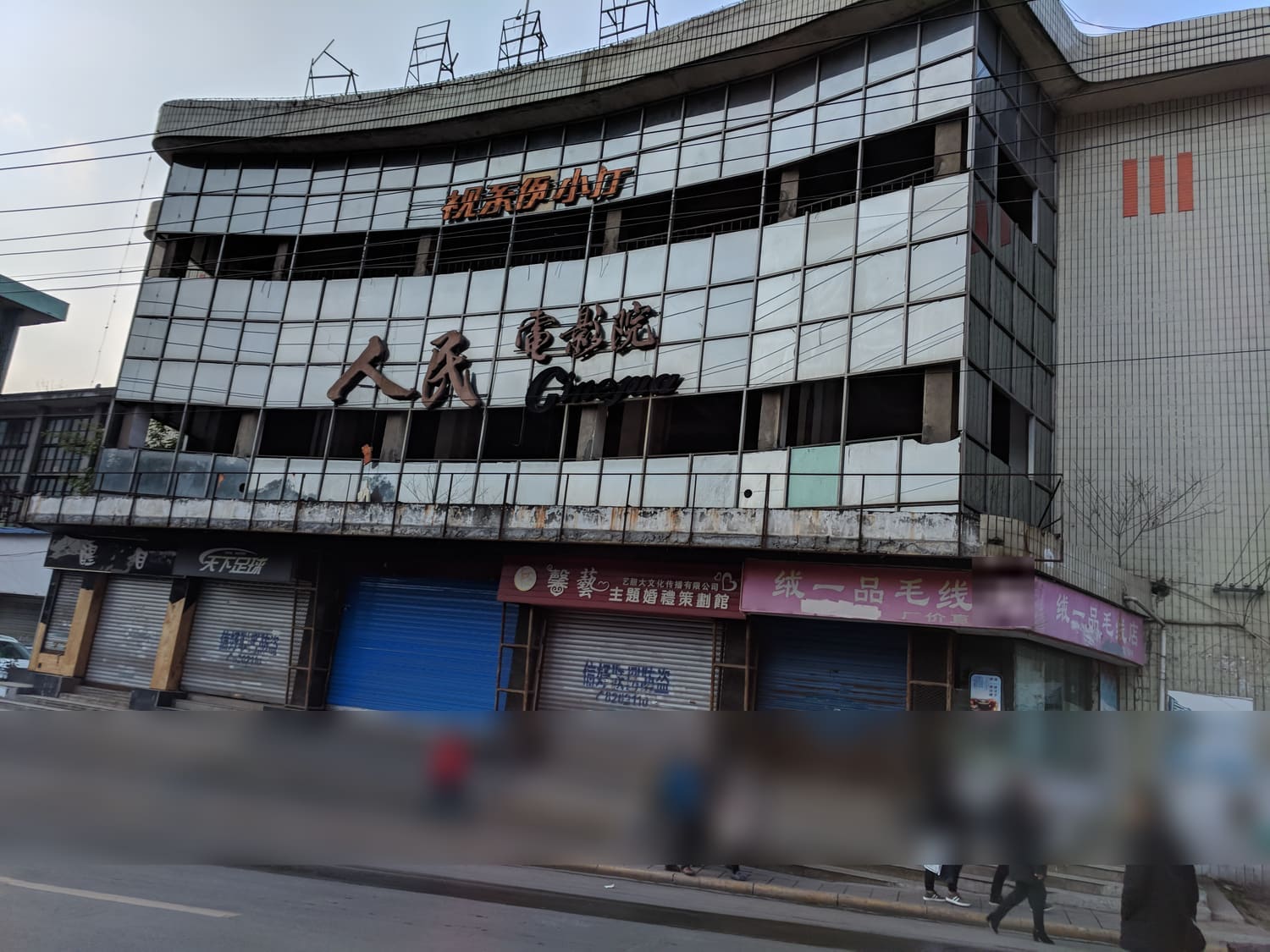
Away from the factories and the sights, Zigong keeps the slowness common to Sichuan cities. In the old quarter the tea house is the living room of daily life: a single covered bowl of tea can hold a chair for a whole afternoon, over the clatter of mahjong and the long, unhurried talk the Sichuanese call bǎi lóngménzhèn (摆龙门阵). Along the streets stand old cinemas and shopfronts — some still trading, some down to a weathered sign. The People’s Cinema (人民电影院) on Jiefang Road (解放路), the old Zhupengzi (竹棚子) quarter, sat shuttered for years and was once listed for demolition; in the end it was kept, and is being done up. The city takes some things down and leaves others standing as it goes — the street keeps the record either way.
Beyond the old street: the shopping mall
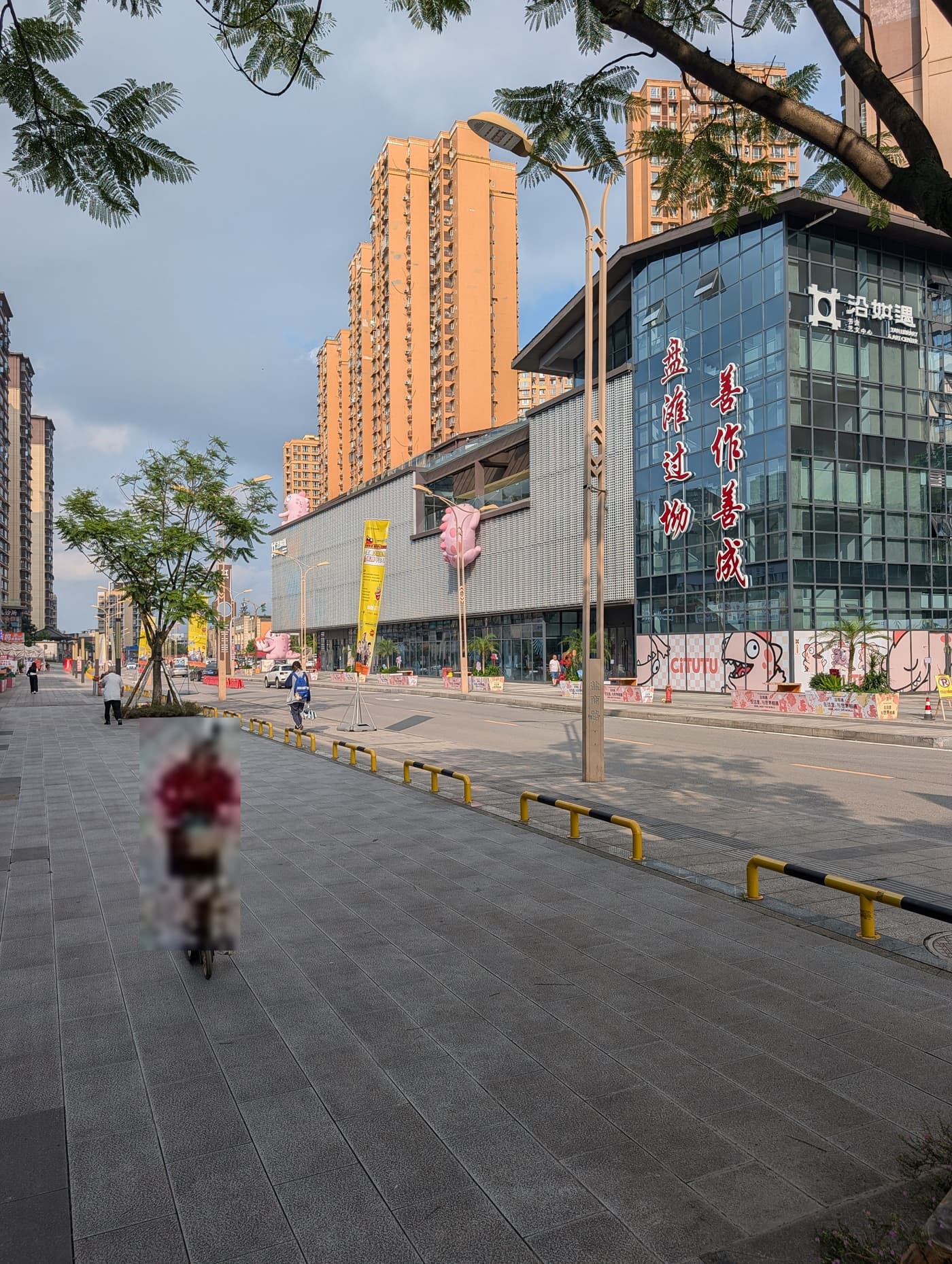
But daily life does not stay in the old town’s tea houses. The city has grown south, and new gathering-places have come with it — among them Huashang International City (华商·国际城), by Nanhu Lake (南湖). Opened in 2015 and spread over hundreds of mu, it folds a shopping mall, pedestrian streets, a cinema, a children’s play-world, and hotels into one site — a textbook contemporary “one-stop” complex. Many a Zigong evening is now spent here: browsing the shops, catching a film, taking the children out, rounding it off with a meal. It has been named one of Sichuan’s “hundred internet-famous spots” and a landmark of the southern-Sichuan “night economy.” The slowness of a covered bowl of tea and the briskness of the mall run side by side in the same city — and that, too, is Zigong in the present.
A city for children
If you are travelling with children, Zigong is almost made for them: the two things children love most — dinosaurs and lights — are the two it does best. They can look down into a real fossil quarry at the Dinosaur Museum (恐龙博物馆), wander among glowing creatures taller than a house in the lantern park at Spring Festival, and watch brine boil into salt over a natural-gas fire at the Shenhai well (燊海井) — a lesson in science and history hidden in the steam. Parks and the riverside give them room to run between the sights.
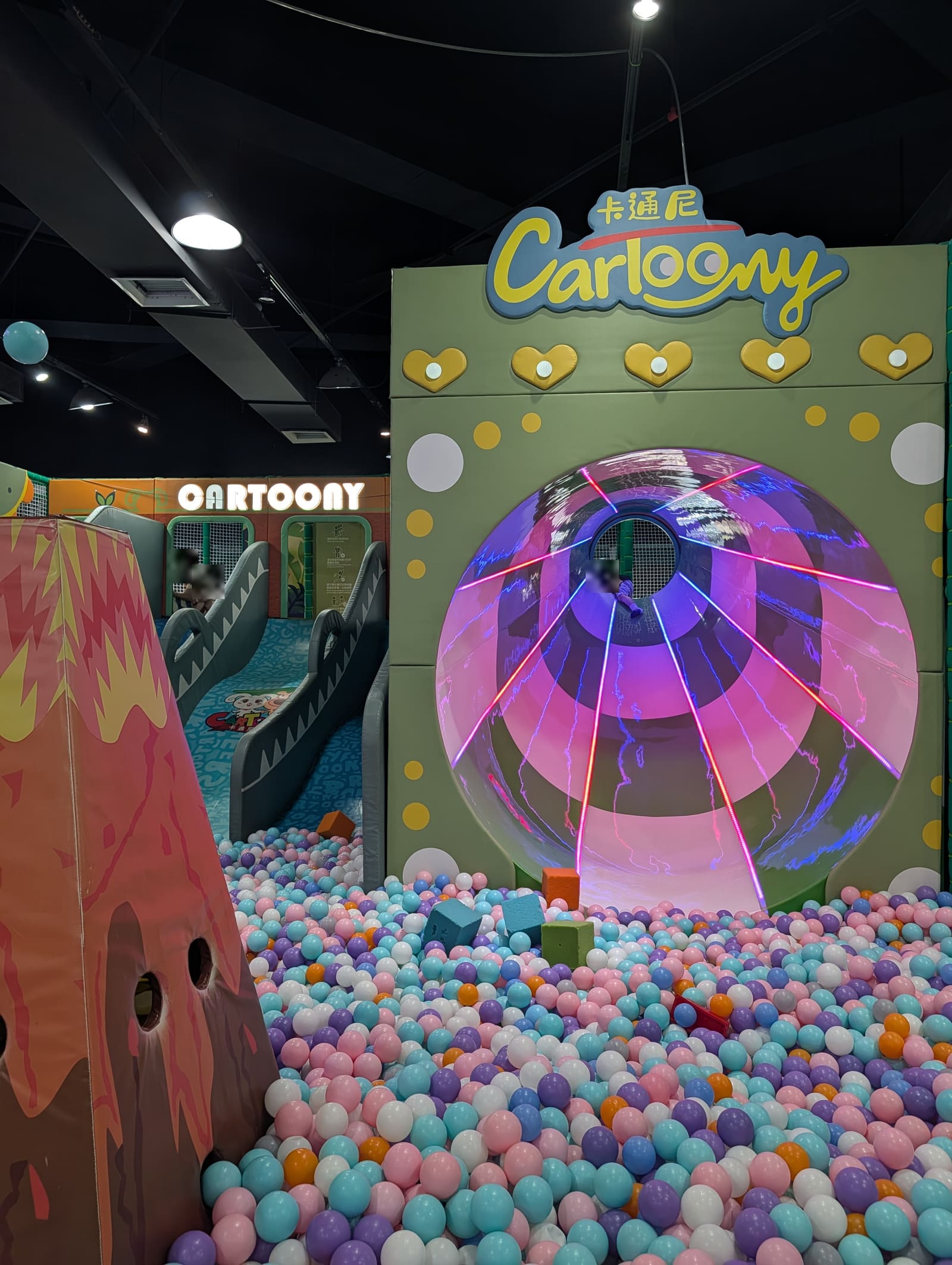
On a rainy day, or for younger children, the Cartoony (卡通尼) indoor playground inside Huashang International City is a regular refuge — slides, ball pits, and the usual rides, enough to burn off an afternoon. For the outdoors, the Shuangfeng Riverside Wetland Park (双凤滨河湿地公园) in Da’an District (大安区) runs along the water, with a red jogging path, waterside decks, and a dedicated children’s play area — a good place for a weekend walk with the kids.
For somewhere quieter, there is the Yanruyu Book-House Cultural-Arts Center (沿如遇书舍艺文中心) in Yantan District (沿滩区) — the district library, newly opened in 2026. Its name is a double pun: it sounds like 盐如玉 (yán rú yù, “salt like jade,” a nod to the salt city) while folding in “Yantan” (沿滩). It holds around 100,000 books and sets aside a children’s reading-and-arts space — another way, beyond lanterns and the mall, to give a child an afternoon.
The city in the present tense
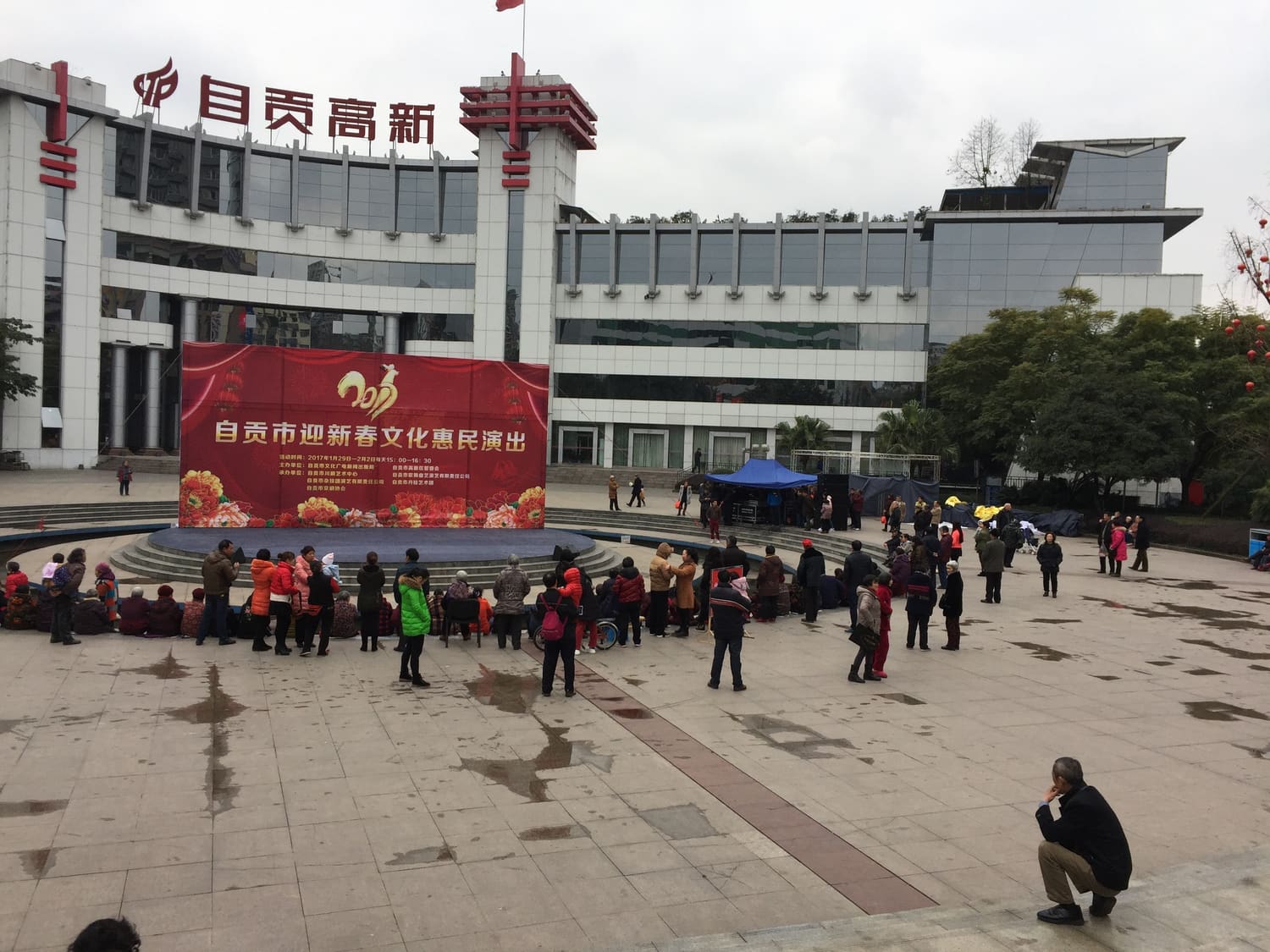
And the city’s “now” tends to happen in the most ordinary settings: on the square in the hi-tech district, a Spring-Festival “culture for the people” performance puts up its red backdrop and the older residents pull up little stools to gather round. There is no salt well in the picture, and no dinosaur — and it is just as much Zigong: a city still working, still living, still putting on a show for itself.
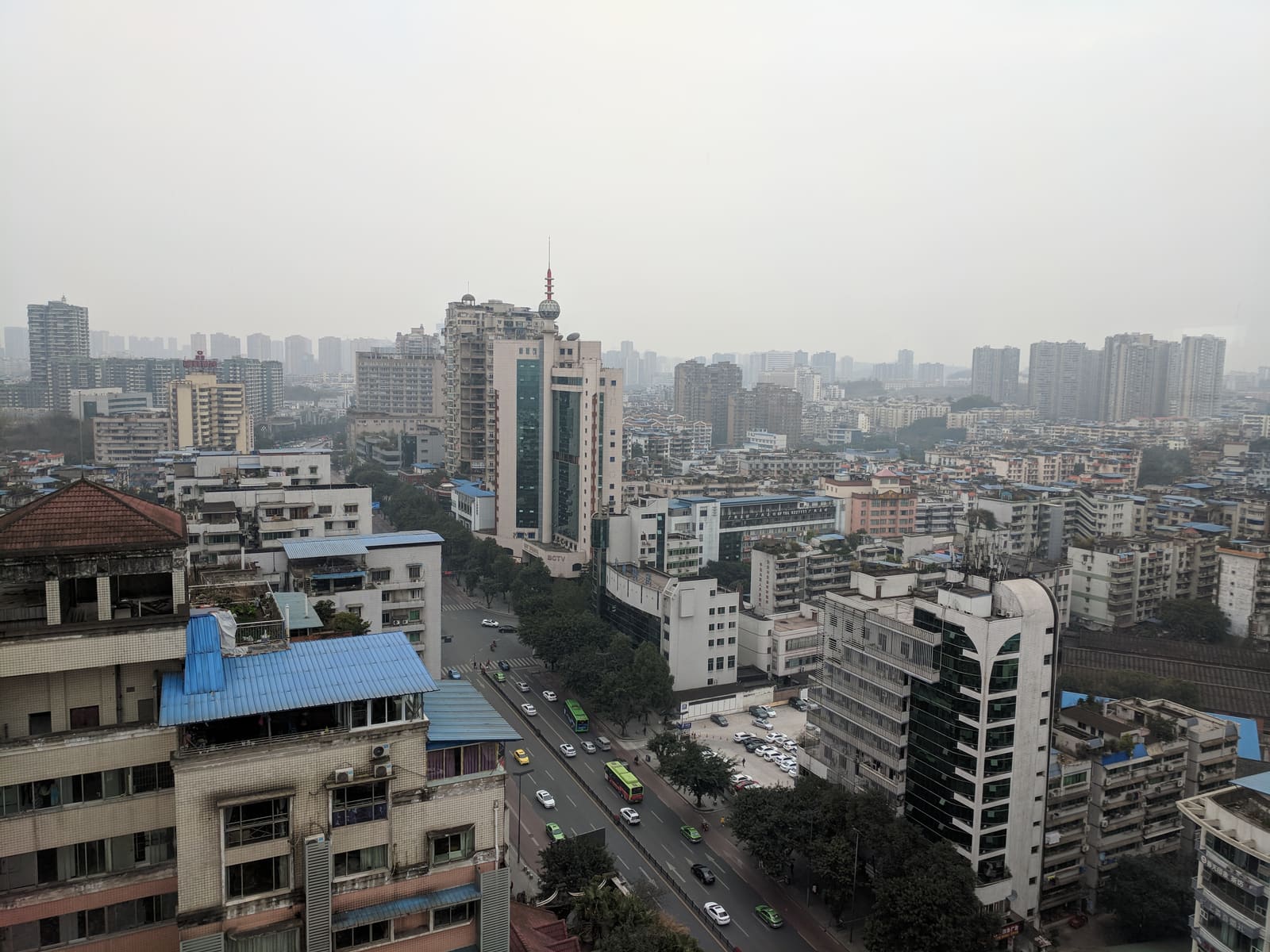
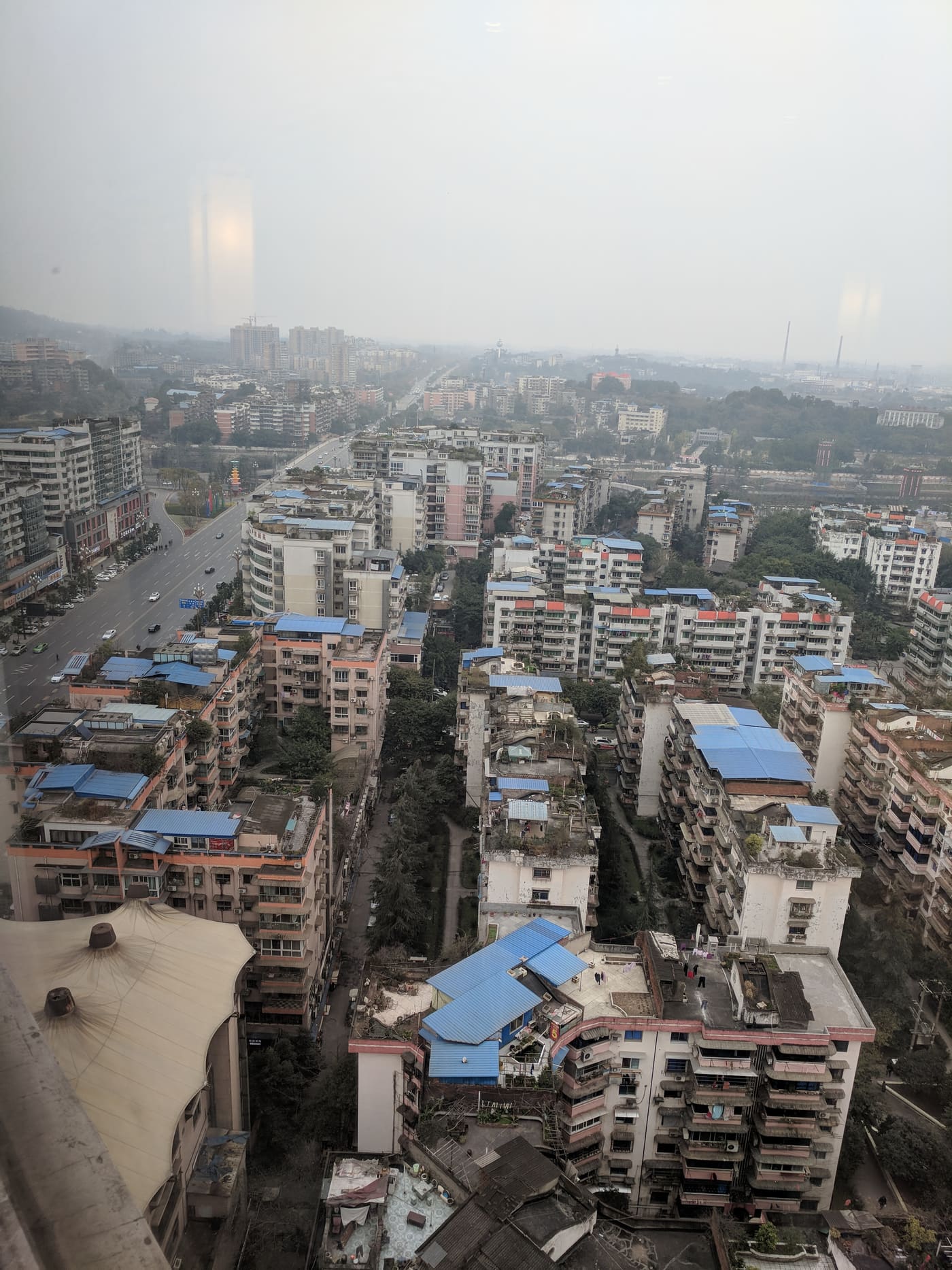
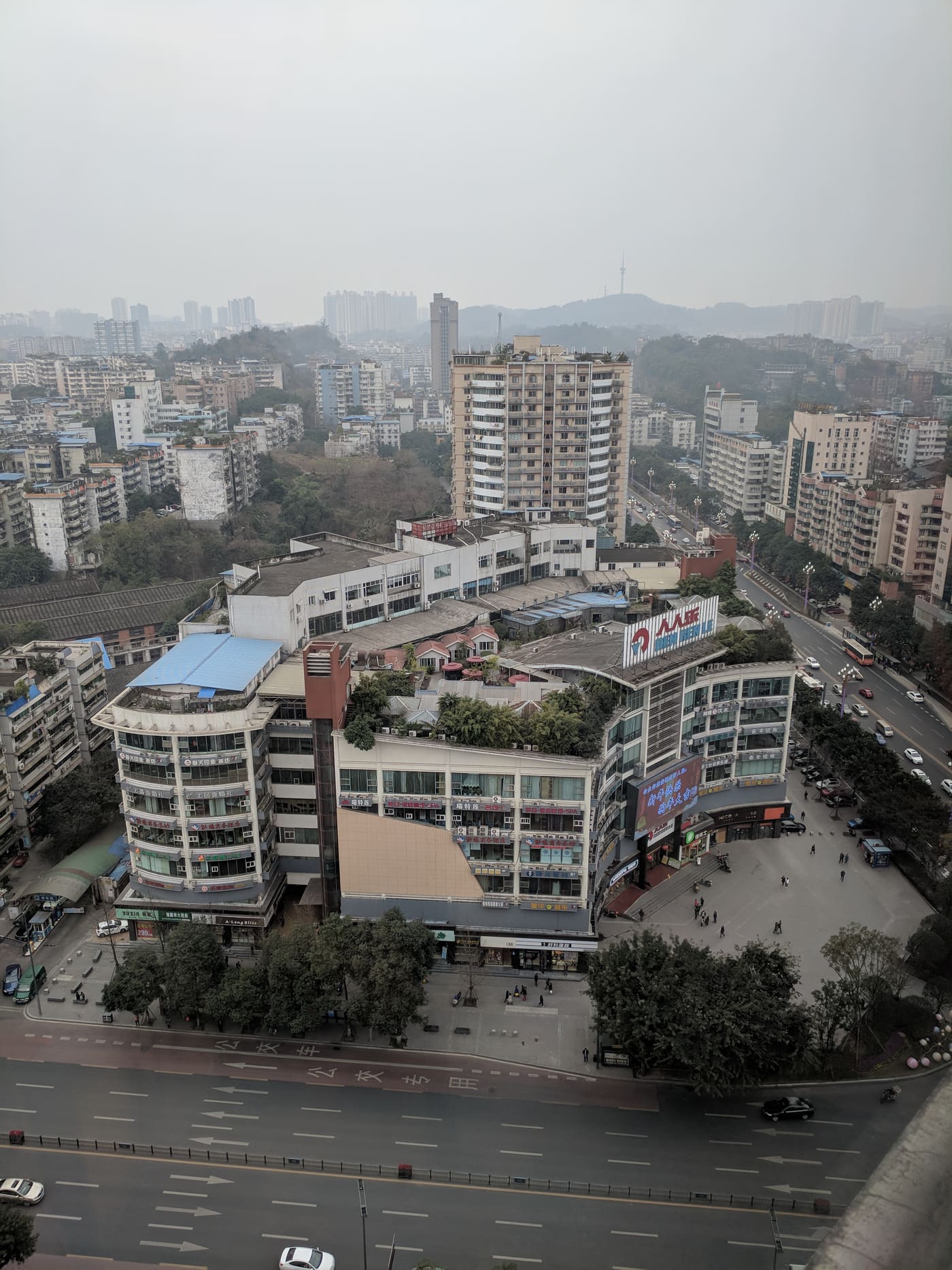
To understand a city is, in the end, to read its daily life: what it eats, where it spends an afternoon, what it keeps for its children. Zigong’s past is extraordinary — but what keeps it alive is this, the unremarkable things that happen every day.